
Blogs
Why Your Textile Mill Needs a High-Efficiency Carding Machine Today
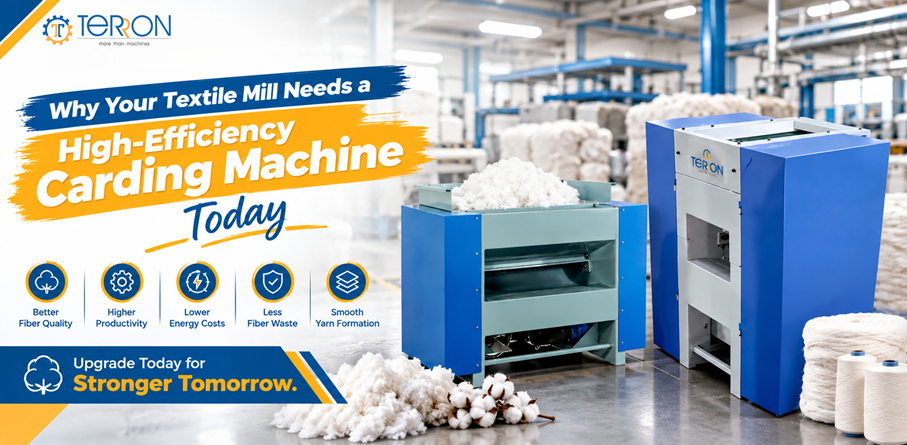
Consistent fibre preparation is important to the textile manufacturing process to ensure product quality and production flow. A carding machine is used to separate, clean, and align fibres before further processing. If a mill is equipped with the right high-efficiency equipment, it can improve material handling, decrease unnecessary interruptions, and have a more consistent fibre output.
Therefore, choosing the proper machinery is a vital element for textile companies that want to optimise their everyday work and adapt to the changing needs of production.
Enhance Fibre Preparation and Quality
Carding is an important step in the preparation of fibres for spinning and other manufacturing operations. The tangled strands are fed into the machine, which strips out certain contaminants and short fibres and arranges the material into a more uniform form. Consistent fibre stock for downstream activities follows from good preparation.
Terron India manufactures carding machine for textile mills to meet fibre processing needs, allowing firms to better organise raw material before it advances to the next stage of manufacturing.
Boost Production Efficiency
The high-efficiency textile carding machine can help to provide a smoother workflow by consistently processing fibres and minimising disturbance due to uneven feed of material.
The fibre-processing models available with Terron India include models with production capabilities of 125-150 kg per hour, 250 kg per hour, 300 kg per hour and 400 kg per hour.
Choosing capacity in terms of the mill's workload can help to match processing speed with production goals and prevent unwarranted bottlenecks between interconnected equipment.
Why is fibre separation important?
Fibre length and uniformity can impact future stages of manufacture. The industrial carding machine separates the longer and shorter fibres so that the material can be fed to different processing lines depending on the final application.
This can make material management more systematic and help mills use fibre resources efficiently. The best setup relies on the raw material, the desired output, and the manufacturing process. Equipment specifications should be checked by manufacturers to see which setup works for their operations.
Practical Design to Minimise Disruption
Maintenance and equipment reliability affect production continuity. Terron India’s automatic carding machine is described as having a big carding area, an oil tank, an air blower, and air lines to help operation.
Automatic lubrication is also listed, which helps to decrease the requirement for repetitive human lubrication chores. Routine examination is made easy by a compact construction. Regular cleaning, timely servicing and following operating advice are still important to maintain machinery in suitable functioning condition.
Select Equipment That Suits Your Mill
Before buying a carding machine, determine fibre type, hourly processing requirement, available floor space and power supply, and compatibility with existing equipment.
Some models of carding machine manufacturer Terron India come with features like automatic conveyors, overload protection, and reverse-drive choices, so it's worth checking what features are included in the configuration you choose.
This is achieved by comparing the specs to what the firm actually needs, so that the business does not invest in machines that are unsuitable or too big for the job.
Conclusion
A good carding machine will help textile mills optimise fibre preparation, ensure steady workflow, and better manage production. The optimum option relies on the processing capacity, raw material, operational conditions, and maintenance requirements.
Terron India provides fibre carding and opening machines to suit various production needs. Contact Terron India to discuss your mill's requirements, explore machine specifications, carding machine price, and find the right equipment for your fibre-processing flow.
Frequently Asked Questions (FAQ's)
What is the purpose of a carding machine?
It aligns and separates the fibres, preparing them for the next steps of processing.
Are carding machines adjustable to varying production capacities?
Yes, various models have different output capacities to suit different processing needs.
TRENDING POST
RECENT POSTS
Industrial Quilting Machine: Benefits & Applications
Oct 12, 2026
Toy Making Machine for Soft Toys: What to Know
Oct 05, 2026
NEWSLETTER
Subscribe my Newsletter for new blog posts. Stay updated from your inbox!

Leave a Comments