
Blogs
Industrial Textile Waste Shredders: Types, Applications & Buying Guide
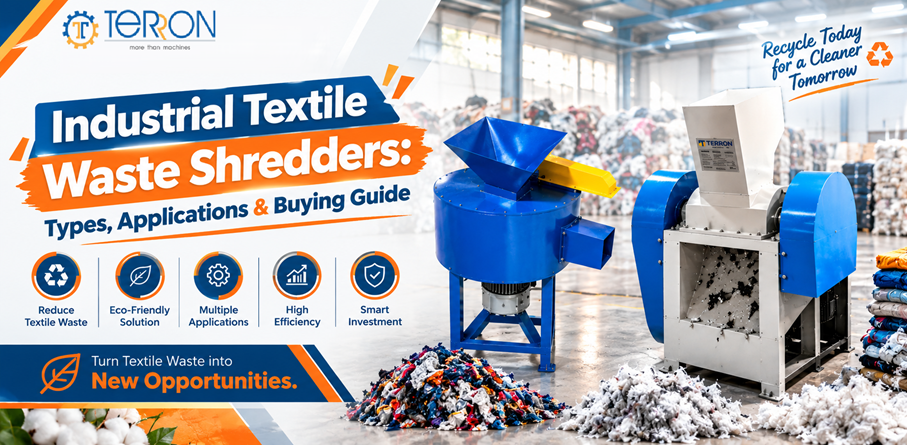
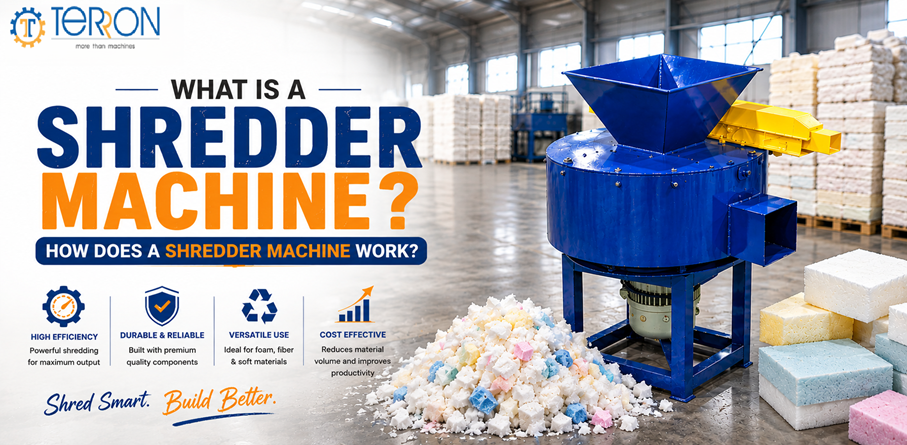
Handling fabric scraps and other trash produced throughout the process of textile manufacture can be challenging manually. Industrial textile waste shredders break down these materials into smaller, more manageable pieces, making them easier to process and recycle.
Terron India has industrial textile waste shredders for foam and cloth waste, and different models give varying outputs. The correct machine can assist manufacturers, recycling facilities, and other industries in streamlining trash processing and making recovered materials more useful. Keep on reading to know about all the details.
What Types of Shredders Are Available for Textile Waste?
Textile waste shredders vary in terms of processing capacity, power requirements, and intended application. The TCTI-001 is a 150–200 kg/h shredder with 5 HP three-phase electricity, listed by Terron India.
The TCTI-002 has a 12 HP motor and manufactures 300+ kg/h of fabric and 80-100 kg/h of foam. The textile recycling models TRTI-001 and TRTI-002 have capacities of 60–100 kg/h and 100–150 kg/h, respectively.
What are the uses of a textile waste shredder?
A textile shredding machine can be helpful in a variety of stages of textile waste treatment. One way to optimise material handling within production facilities is to break down fabric waste into smaller pieces for additional recycling or processing.
Depending on the material and the way it is processed, recovered textile materials can be utilised in fibre applications, insulation, mattresses, non-wovens and other goods. Shredding is therefore a crucial pre-treatment step for companies to recover value from used textile materials.
Important Features to Know Before Buying
When choosing a textile recycling machine, firms should consider factors such as output requirements, material type, electrical specifications, available installation space, and automation features. Terron India’s TCTI variants are fully automatic with integrated operation panels and overload prevention.
The TCTI-002 also has drive control. These functions may assist in simplifying operation while supporting consistent processing. Businesses should choose equipment according to their real waste volume, not just the maximum capacity of the unit.
Textile and Recycling Operations Applications
An industrial textile shredder can be used in garment manufacturing, textile production, recycling facilities, and businesses that deal with foam or fabric waste. The machines may treat materials such as cotton, polyester, denim, knitted fabrics and blended textiles for further recycling applications.
Shredding can convert bulky waste to manageable material and help firms separate their waste streams and prepare resources for further recovery. The choice of machine should be appropriate to the content of the waste and to its intended ultimate use.
Summary
When selecting appropriate textile waste recycling equipment, one must consider capacity, material compatibility, automation, and long-term running needs.
Terron India offers textile waste shredding and recycling machines of various capacities, including models for fabric and foam waste. Its equipment has features like overload prevention and autonomous operation, and the company offers technical assistance, servicing, and repair support.
Contact Terron India today to discuss your textile waste processing needs and select a machine that’s right for your operation.
Also read: Types of Waste Recycling Machines: Shredders, Balers, Granulators, and More Explained
Frequently Asked Questions (FAQ's)
What materials can textile waste shredders process?
The textile shredders are capable of shredding cloth and foam waste, and different fabric materials depending on the model.Â
What output capacity is available?
Terron India offers textile shredding models from 60-100 kg/h to 300+ kg/h for fabric waste.
What should I consider when buying a textile shredder?
Consider material type, desired output, power supply, available space, and automation needs while making a decision.
TRENDING POST
RECENT POSTS
Industrial Quilting Machine: Benefits & Applications
Oct 12, 2026
Toy Making Machine for Soft Toys: What to Know
Oct 05, 2026
NEWSLETTER
Subscribe my Newsletter for new blog posts. Stay updated from your inbox!

Leave a Comments