
Blogs
The Rise of Automated Textile Waste Recycling Machines in India
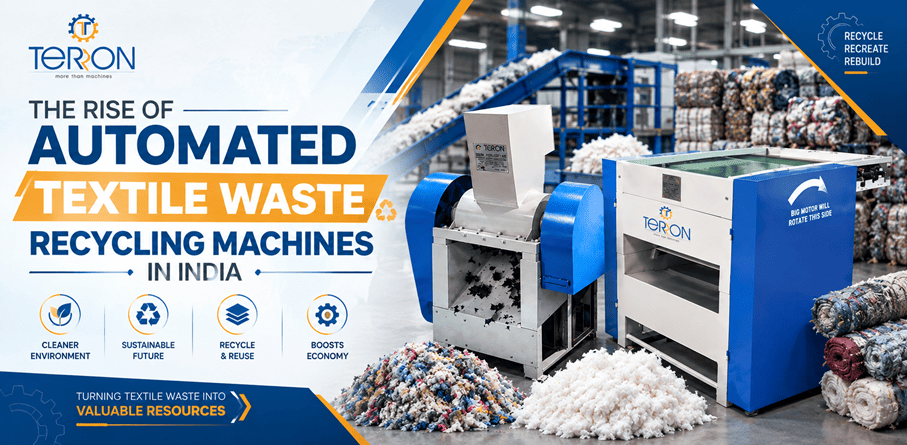
India’s textile industry produces a lot of fabric waste in production, cutting, and processing. Automated textile waste recycling machines are more relevant to organisations looking for practical ways to deal with this trash. They can cut down on the need for manual handling and help turn waste cloth into a material that can be reused.
Terron India provides specialised shredding and recycling machinery for foam and textile waste, helping organisations who seek to optimise their material recovery and streamline their waste management procedures.
Why Automation is Important for Textile Recycling?
The manual processing of textile waste can be labour- and time-intensive, especially when dealing with greater volumes by enterprises. Automation can be used to make shredding and recycling more uniform and can assist simplify repetitious tasks.
Terron India’s recycling machine is equipped with completely automatic systems with built-in operation panels and overload protection. Depending on the model, organisations can process between 60 kg and more than 300 kg of fabric waste per hour, offering a choice for varying production needs and processing volumes.
Intelligent Machines for Diverse Processing Requirements
It is necessary to choose a textile waste recycling machine according to the desired capacity for the maintenance of efficient workflow. Terron India provides a series of textile waste machines including TCTI-001, TCTI-002, TRTI-001 & TRTI-002.
The TCTI-001 delivers 150–200 kg/h, and the TCTI-002 can handle more than 300 kg/h of fabric. The recycling models give outputs of 60–100 kg/h and 100–150 kg/h, respectively.
What are the Benefits of Automated Recycling Machines?
Automation can introduce a more systematic approach to textile waste processing by decreasing the need for continual manual involvement. The operator may easily control the machine's activities with overload protection and integrated operating panels. The TCTI-002 also offers drive control.
The machines made by recycling machine manufacturers run on three-phase power systems. These features can enable continuous processing in textile production units, recycling facilities, and other enterprises that deal with fabric or foam waste, depending on their material processing specificities.
Selecting the Right Recycling Equipment
Companies need to examine the volume and type of trash they produce, the power supply available, the needed output, and the space available for installation before investing in an automatic textile waste recycling system.
Terron India offers foam waste recycling machines with varying capacities, power requirements, and physical configurations to enable organisations to choose equipment as per operational demands. The models that it lists are also covered by a one year manufacturing guarantee and a one year motor warranty for further support with your equipment investment.
Summary
Textile companies are being pushed to adopt more effective waste management practices and are looking into automated recycling options that provide more consistent handling of fabric waste. Terron India provides alternatives for diverse processing capacities and needs, from shredding machines to specific recycling models.
If you are looking to modernise textile waste processing or develop a recycling operation, get in touch with Terron India now to discuss your requirements and select the ideal automated recycling system for your business.
Also read: Textile Waste Shredding Machine: A Complete Guide for Efficient Fabric Recycling
Frequently Asked Questions (FAQ's)
What kind of waste do the recycling machines of Terron India process?
The machines listed are for the shredding or recycling of foam and textile waste.
What is the output capacity of Terron India’s textile recycling machines?
Depending on the machine, the available versions output from 60 kg/h up to more than 300 kg/h.
Are Terron Indias textile recycling machines automatic?
Yes. The described types have completely automatic systems and integral operating panels.
TRENDING POST
RECENT POSTS
Industrial Quilting Machine: Benefits & Applications
Oct 12, 2026
Toy Making Machine for Soft Toys: What to Know
Oct 05, 2026
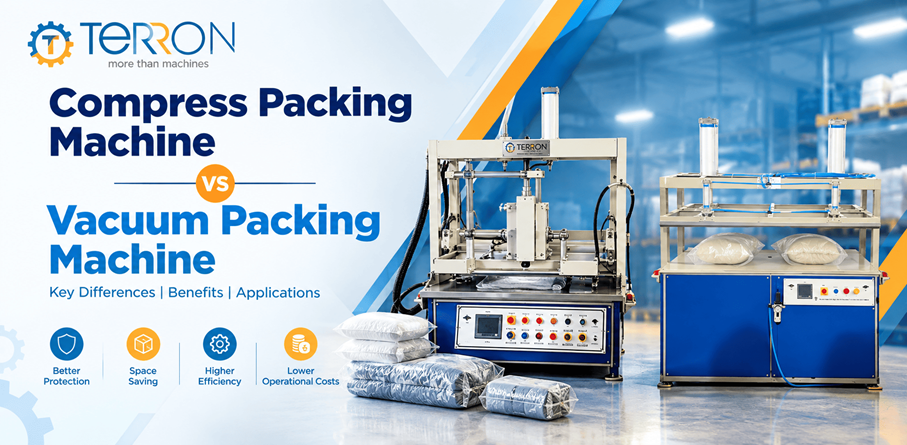
Compress Packing Machine vs Vacuum Packing Machine
Sep 25, 2026
NEWSLETTER
Subscribe my Newsletter for new blog posts. Stay updated from your inbox!

Leave a Comments